Stretching

This Part is mostly ignored by the new comers but it is one the most important part while building muscle. Stretch mediated response is based on theory that most hypertrophy/growth response happens where muscle is stretched under load(when the muscle is contracted while being furthest from the base axis line).
On language of us bare mortals it means most muscle growth response happens in the initial/starting half/portion of the exercise.
Multiple studies found that partial reps performed in the starting half of the concentric phase elicit much greater hypertrophy response compared to the upper half of the concentric phase.
Tested exercises were squats, leg extensions, leg press, preacher curls, triceps dumbbell extensions and even bench press.

Subjects who trained with emphasis on “stretch mediated response” achieved significantly greater growth in the targeted muscle groups compared to subjects who performed upper half portion of the exercise
➡️53% vs 18% increase in muscle cross-sectional area
➡️31% vs 7% IGF-1 spike
.
If you’re using partial reps as an intensity technique on top of your regular full ROM reps than this is crucial.
.
Using partial reps can be a great way to accumulate additional volume and increase time under tension to stimulate growth but if you’re doing it probably the smartest way to do it is to take advantage of the stretch mediated response effect.

Perform your partials in a bottom/starting half of the concentric phase of the exercise to maximize its effectiveness.✔

Reason why I’m bringing this up is because through observing different lifters I realized most people perform partials in the upper half portion of the concentric phase(most likely because it feels easier) but the goal is to maximize hypertrophy stimulus not being comfortable.
Lifting and Joint Health

I did get many queries regarding joint pain and lifting. Here are some facts to clear that. Usual concern is that lifting will lead to injuries or some kind of joint issues but if we’re going to believe the studies exactly the opposite is the case.
Studies are indicating that consistent lifting is progressively increasing the bones and connective tissue mineral density which automatically builds up the resilience and ability to handle external resistance.
This results in reduced risk of injuries and fractures/ruptures.
Few studies even found links between lifting and release in chronic back pain.

Lifting increases skeletal muscle cross-sectional area and progressively increases demands on the same through progressive increase in external resistance which automatically requires proportional adaptation of the surrounding connective tissue.
Lifting is basically dynamic motion/stretch under resistance so your connective tissue has to adapt to that motion too.

Of course risk of injury will always be present but that is why properly dialed in volume, intensity, recovery and obtaining necessary mobility to meet the dynamic range of motion demands are important.

Actually if we analyze the studies it turns out that lifting has lower risk of injury compared to other dynamic sports.

Weight Loss VS Fat Loss

Before I explain this I want to clear out one thing!
Based on all studies done so far if total calorie deficit(intake) is matching; difference in fat loss rate between low carb(and/or keto) diets and high carb diets is non-existent. Fat loss will occur at a same rate as long as total calorie deficit/intake is matching. PERIOD!
Real question here is; why people on low carb or keto diets seem to lose weight faster?

It’s simple really!
Every gram of carbs pulls and retains 2.5-3g of water!
Your body logically converts carbs into glucose and stores it in a form glycogen! If your total carbs intake over time surpasses glycogen stores capacity (body can store up to 400g of glycogen in muscles and 100-150g in liver) it will store those carbs as a water “trapped” in the sodium ions (subcutaenous water). Not to mention sodium also pulls the amount of water(osmotic molecules).
For every gram of stored glycogen you store 3-4g of water so there’s that too.
So if someone restricts carbs(no carbs or very low carb intake) he will start dropping water weight at a faster rate and this will result in more aggressive weight drop.
This doesn’t mean they’re losing fat faster but scale will show drastic change and those same people will start praising low carb or keto diet they’re on like it’s “one above all” while in reality they just lost some water weight.


You also now understand why a lot of coaches are using and advising keto/low carb approach and give you a “fast results” while in reality they’re selling you bs!
As long as you’re in caloric deficit low carb or keto diets will of course work but fact you’re losing weight faster doesn’t mean you’re losing fat faster.

How Muscles Grow

After you workout, your body repairs or replaces damaged muscle fibers through a cellular process where it fuses muscle fibers together to form new muscle protein strands or myofibrils. These repaired myofibrils increase in thickness and number to create muscle hypertrophy (growth). Muscle growth occurs whenever the rate of muscle protein synthesis is greater than the rate of muscle protein breakdown. This adaption, however, does not happen while you actually lift the weights. Instead, it occurs while you rest.
– 
So how do you actually add muscle to your muscle cells? This is where Satellite cells come in and act like stem cells for your muscles. When activated, they help to add more nuclei to the muscle cells and therefore contribute directly to the growth of myofibrils (muscle cells). Activating these satellite cells may be the difference between what allows certain “genetic freaks” to grow massive muscles and what makes other people “hard-gainers.
– 
In one of the most interesting studies in the past 5 years, researchers showed that those who were “extreme responders” to muscle growth, with an incredible 58% myofiber hypertrophy from an exercise, had 23% activation of their satellite cells. Modest responders, who had a 28% growth, had 19% activation of their satellite cells. What is interesting to note, though, is that some people known as “non-responders” in the study had 0% growth and had a concurrent 0% activation of their satellite cells. Therefore, it seems the more you can activate these satellite cells, the more you’ll be able to grow. – 
So then the question becomes, how do you activate these satellite cells to increase muscle growth? 
The answer – Muscle damage

Protein Intake

There is a lot of false rumors going around when it comes to protein intake to make a muscular physique. It does mot work like eating protein like a wild animal will make your muscles grow.

This is because your body can only process 35-40 gm of protein per diet, rest of it gets rejected,(also depends on lifestyle and exercises). Understanding the most important factor in fat loss can be pretty darn confusing.

Some people will tell you just not to eat carbs.

Others will say optimize gut health and voila the fat is gone.

Still others might say just drink celery juice and magic things happen.

Creating a calorie deficit is THE key to losing fat. Consume fewer calories than you expend; it’s that simple (sorta).

So, yes, technically you can consume whatever you want and still lose fat. But…you need to make this process enjoyable (somewhat) and sustainable.

On the left, we have a day of eating similar to what I have seen many clients/people in general consume. If 2000 calories puts you in a deficit, then you could certainly eat this way and lose fat. I actually think certain days like this are totally fine and should be included for adherence if you like these foods. However, this way of eating, generally speaking, should be an outlier, not the norm.

For the most part, the left:

is low protein

is low in vitamins and minerals

is not filling

is low fiber

could cause poor digestion

would not optimize energy levels

would cause workouts to suffer

Understanding all of that, we know the types of foods you eat are incredibly important, not just how many calories you are consuming. The right is just an example of better food choices – higher in protein, fiber, nutrients. Basically the opposite of the left. You do NOT have to eat the foods on the right. It is an example only.

To lose fat, make sure you are eating roughly 80% whole, healthy foods with vital nutrients to support optimal health. Then, include foods you love (like beef stroganoff) regularly in reasonable quantities to support sustainability and adherence. This is because your body can only process 35-40 gm of protein per diet, rest of it gets rejected,(also depends on lifestyle and exercises).

Hope this guys helped you out a bit.

BENEFITS OF DEADLIFT

Guys today we are going to talk about the benefits of deadlift, may it be sumo or conventiaonal.

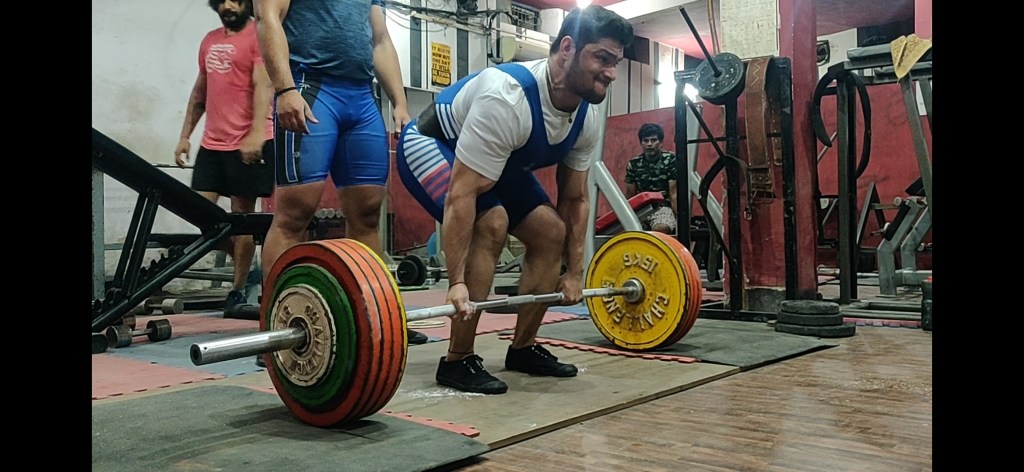
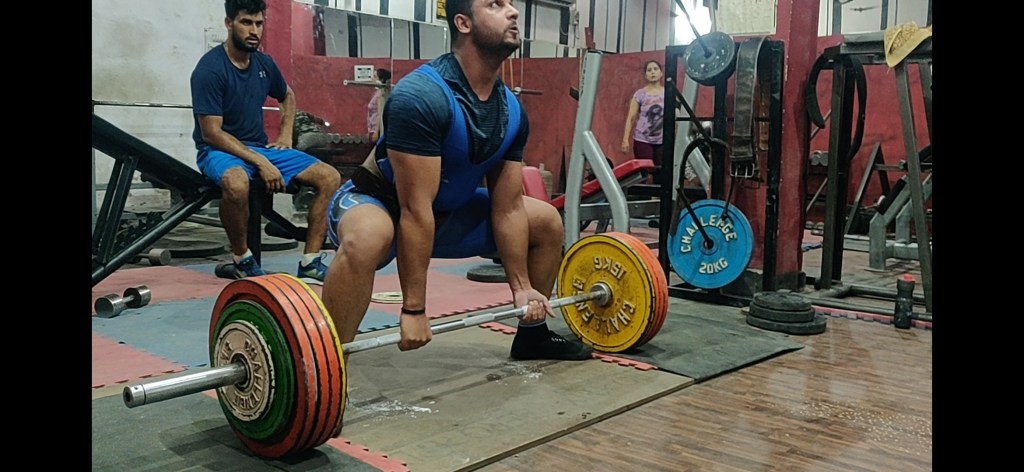
In my opinion deadlift works almost every muscle of your body, it is not only limited to glutes, back and forearms. Not only that it has many tremendous benefits no matter you goal of fitness or fatloss or muscle build. It helps in all.

  • Increased fat burning.

when you are training to lose your weight, Deadlifts are good way to boost it. It is very good exercise which helps you in loosing weight fast that too with building muscle.

  • Improved posture

Deadlifting increases your core strength and adds to core stability . Deadlifting targets all of the muscles responsible for your posture and enables you to keep your back straighter during regular daily activities. Deadlifting increases your core strength and adds to core stability .

  • Increases lift in real life

The Deadlift develops the muscles you need to actually carry something, like a bucket of water, those heavy grocery bags or your neighbor’s dining room table.

  • Improves grip strength

Deadlifts are known for their ability to build massive muscle groups. While performing a deadlift your fingers are literally trying hard to keep your bar falling from ground. With regular leaps and bounds your grip strength increases.

  • Cheap and Easy

Believe it or not deadlifts are one of the most cheapest forms of exercise. In other Exercises you might need equipments and other accessories but with deadlift you need a bar and some weights. lets roll.

  • Increases cardiovascular strength

Believe it or not, doing 10 repetitions of Deadlifts will increase your cardiovascular ability. You might want to make sure you have somewhere to sit down when you’re done!

  • Prevents Injuries

The Deadlift can help prevent injuries by increasing the strength of your muscles around critical tendons and ligaments. Supporting joints with strong muscles is crucial to preventing injury, especially in the hamstrings and lower back

Deadlift

Hi guys, this is my first blog ever about some fitness tip. I know am not a fitness model or an athlete at any professional level, I am just an ongoing college student like you guys here so it would so easy for you to relate with me as I face same problems as you guys may it be regarding time or diet or injuries.

So guys today I am just talk about the differences between a sumo deadlift and a convential deadlift in much simpler terms so you guys can understand it easily. So here it goes-

CONVENTIAL DEADLIFT-

The first step in mastering the conventional deadlift is assuming the proper stance. As you approach the bar, position yourself so that your feet are about hip-distance apart, your toes are pointed forward, and your shins are very close to the bar.

When you lift, you will essentially drag the weight up your shins, keeping the barbell close to your body the whole way up. Keeping the bar close prevents your center of gravity from shifting too far forward. Keeping the center of gravity back is important not only for protecting your back, but also for maximizing the amount of weight you can lift.

With your feet in the proper position and your shins against the bar,  at about a shoulder-width distance. You can use the staggered grip, with one hand in an overhand grip and the other in an underhand grip, or you can use two overhand grips. For most people, using the underhand grip can put added stress on the forearm. When you’re going heavy, that can lead to forearm injury.

SUMO DEADLIFT-

The main difference between the sumo and the conventional deadlift is the position of the feet and hands. Instead of being about hip-width apart, with sumo the feet are positioned wider than your hands. How wide apart they are depends on your height, but they will be much farther apart than shoulder width. With your feet spread so far apart, your hands will want to grab the bar closer together than in a conventional deadlift, typically at about shoulder width. As with the conventional deadlift, use a staggered or overhand grip; it’s up to you. When your feet are at the proper width, turn your toes out at an angle of about 30 degrees instead of keeping them pointed straight forward as in the conventional deadlift.

Design a site like this with WordPress.com
Get started